

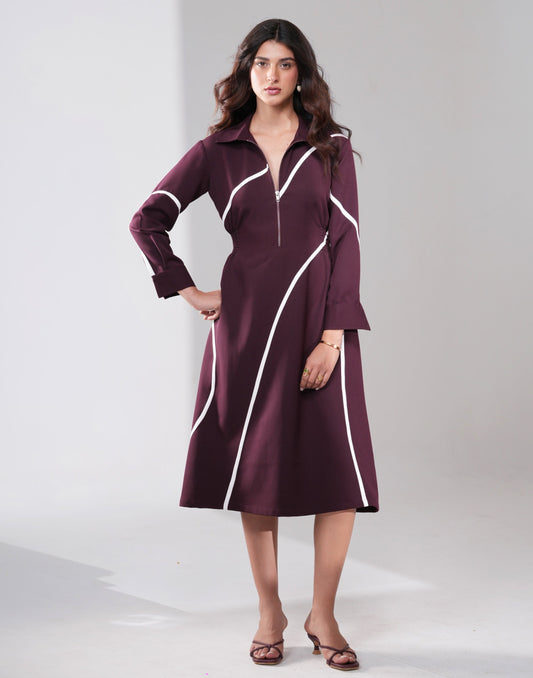
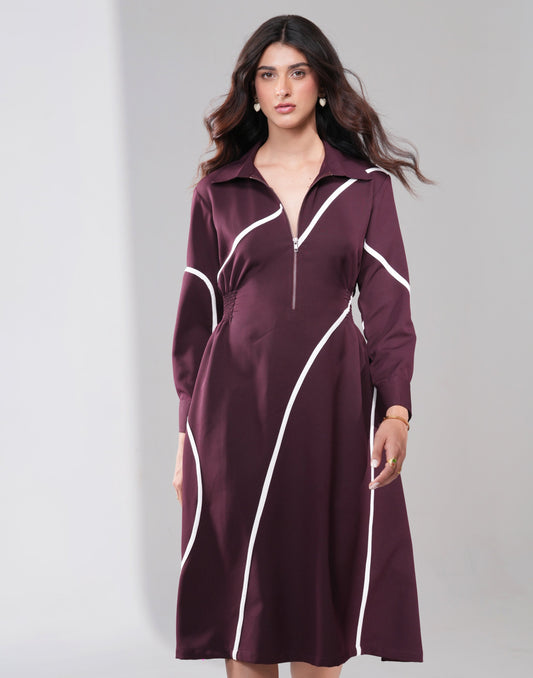

Petite women in India — broadly, anyone 5'4\" or under — are an underserved category in fashion advice. Most styling guides assume an average-height frame, recommend silhouettes that overwhelm petite proportions, and skip the very specific fit rules that make western wear look genuinely good on a smaller frame.
This guide is the corrective. It covers everything a petite Indian woman needs to know about western wear: the silhouettes that actually flatter, the proportions that elongate, the fabric weights that work, the hemlines worth tailoring, and the styling rules that most articles never mention because the writer isn't petite themselves.
Petite isn't a problem to solve — it's a frame to dress for. Once you understand the principles, dressing for a petite figure becomes one of the easiest body-type categories to style for. Clean lines, considered proportion, the right hem length — and almost every western silhouette becomes available to you.
What "Petite" Actually Means
Petite refers specifically to height and frame proportion — not weight or size. A petite woman is generally 5'4\" (163 cm) or under, with body proportions that tend to come in slightly smaller than the average size chart assumption. A petite woman can be slim, curvy, athletic, or somewhere in between. Size and shape are independent of being petite.
The two practical implications of being petite that most matter for western wear:
Standard hem lengths often run long. A midi dress designed for a 5'7\" frame can hit at the ankle on someone 5'2\" — turning what was meant to be a calf-length midi into an awkward ankle-grazer. The cut isn't wrong, the proportion is just designed for a taller frame.
Visual proportion needs more deliberate balance. Petite frames benefit from styling that creates a clear silhouette — visible waistline, defined shoulders, and unbroken vertical lines from shoulder to hem. Without this, outfits can read as "swallowing" the frame rather than dressing it.
Co-ord Sets That Lengthen and Define
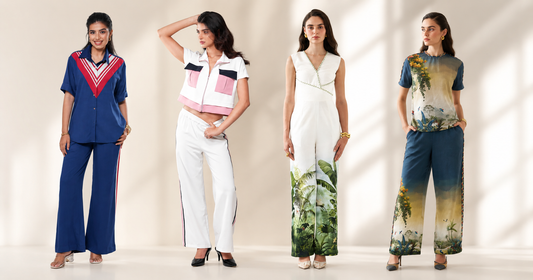
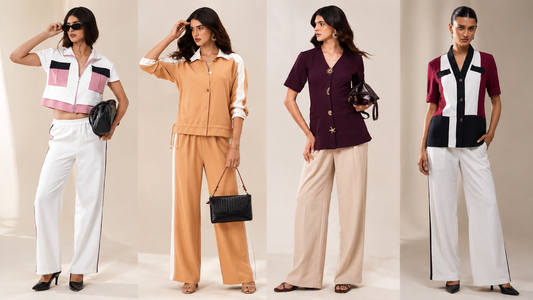
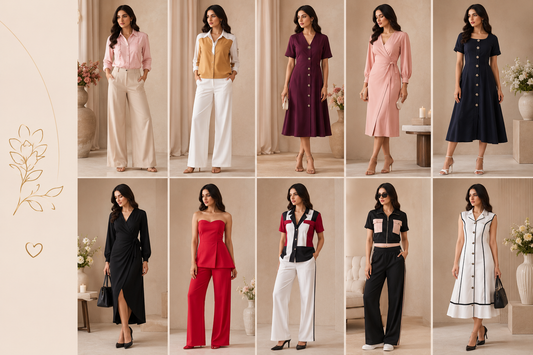
A co-ord set is one of the most flattering western pieces a petite woman can own. The matching colour creates an unbroken vertical line from shoulder to ankle that elongates the entire silhouette. Each of these has a defined waist or proportional cut that works specifically well on petite frames.


The 6 Principles of Dressing a Petite Frame
Principle 01
Define the Waist — Always, Visibly
The single most impactful styling decision for a petite frame is making the waistline visible. A clearly defined waist breaks the silhouette into proportional thirds — chest, waist, hips — creating the illusion of a longer torso. Without it, even the best-fitting clothes can read as shapeless on a smaller frame.
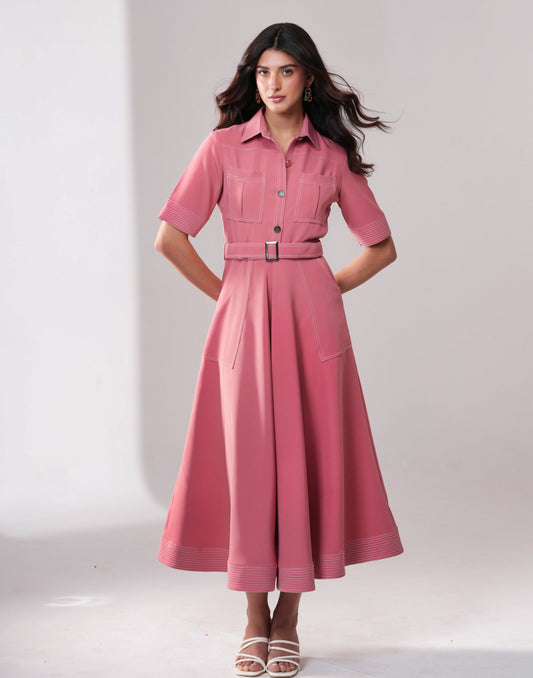
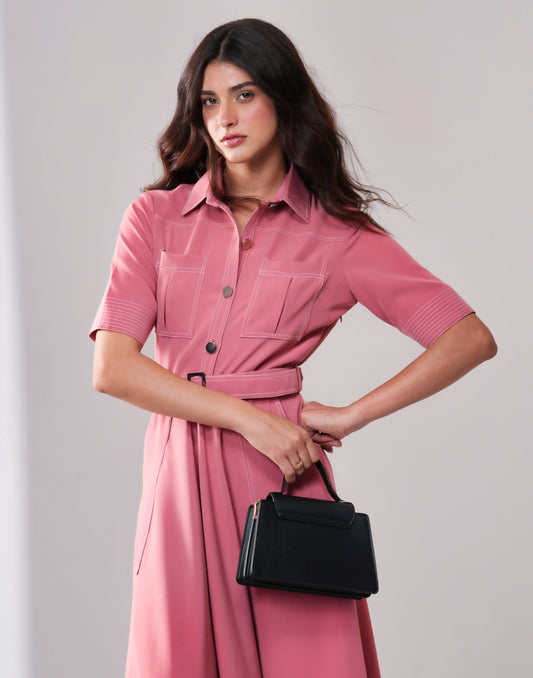
Practical applications: tuck shirts in fully (never half-tuck on a petite frame — the asymmetry shortens the visual line). Choose dresses with belts, fitted bodices, or wrap closures. For co-ord sets, opt for cropped or waist-length tops that let the bottom's high-waist line define the silhouette.
Mohita's Tip: If a piece doesn't have a built-in waistline, add one. A thin gold-buckle belt or a tied silk scarf at the waist transforms a shapeless dress into a proportional outfit on a petite frame. This single accessory hack is worth more to a petite wardrobe than any single garment.
Principle 02
Match Tops and Bottoms in Colour for Length
An outfit in a single colour or in tonally-related shades reads as significantly taller than an outfit that breaks at the waist with strong colour contrast. The unbroken vertical line from shoulder to ankle is the petite frame's best optical illusion.
This is why co-ord sets are one of the most flattering categories for petite women specifically — the matching colour creates exactly this lengthening effect by default. The same principle works for separates: ivory shirt with off-white pants reads taller than white shirt with navy pants. Tonal dressing is petite dressing's quiet superpower.
Principle 03
Choose Hemlines That Hit the Right Bones
The most flattering hemlines for petite women hit at narrow points of the body — just above the knee, at the ankle, or above the wrist. The least flattering hit at the widest points: mid-calf at the calf's fullest, mid-thigh, mid-bicep.
Specifically: skirts and dresses look most flattering above the knee, just below the knee, or at the ankle. Pant lengths look most flattering ankle-grazing or fully cropped to mid-shin (creating a visible ankle), or fully ankle-length — never the awkward mid-calf where pants end at the calf's widest point. Sleeves look best at three-quarter (just below the elbow) or at the wrist — not mid-bicep.
Most flatteringAbove-knee, just below knee, or full ankle-length
Pant cutsAnkle-grazing, cropped to mid-shin, or full-length
Sleeve lengths3/4 just below elbow, or full to wrist
AvoidMid-calf, mid-thigh, mid-bicep cuts
Principle 04
Scale Print Size to Frame
Large, bold prints — think large florals, dramatic geometric blocks, oversized tropical motifs — visually dominate a petite frame. The print becomes the silhouette rather than sitting within it. Small to medium prints, or larger prints with breathing space between motifs, look significantly more proportional.
This isn't a rule against bold prints — it's a rule about scale. A bold-coloured small print works beautifully. A medium-size print with negative space works. A massive single floral that takes up the entire bodice does not. When choosing prints, think about how many "pattern repeats" cross your torso. Two or three is balanced. One repeat that takes up your entire chest is too much.
Mohita's Tip: Most printed co-ords work beautifully on petite frames because the print is broken up across two pieces — spreading the pattern visually. The print piece you really need to assess is a single-piece dress with a large all-over print: that's where scale becomes critical.
Principle 05
Choose Fabrics That Hold Structure Without Volume
Petite frames are best served by fabrics that hold their shape without adding bulk. Cotton linen blends, structured cotton, banana crepe, and stable jersey all work. Heavy fabrics that add visible volume — thick brocades, very stiff embellished silks, oversized layered tulle — add weight to the silhouette in a way that overwhelms petite proportions.
The same applies to fabric movement: drapey fabrics like rayon, chiffon, and cotton linen all flow with the body. Stiff, structured fabrics like canvas or heavy denim hold their own shape regardless of yours. Drapey reads as elongating; stiff and structured reads as adding boxiness.
Principle 06
Tailor Aggressively — It's Cheaper Than Compromising
The single most underrated investment for a petite wardrobe is a relationship with a good local tailor. Most fit issues petite women experience aren't quality issues — they're length issues. A midi that hits awkwardly mid-calf, sleeves that come past the wrist, pants that puddle at the ankle. All of these are 30-minute, ₹100-300 fixes.
The tailoring habit transforms a petite wardrobe. Suddenly the brands and styles available to you double, because you're no longer ruling out pieces based on the standard length. Buy your size in the body, alter the length, and you have access to an entire wardrobe that previously seemed designed for someone taller.
Mohita's Tip: When trying on a piece, the body fit (bust, waist, hips) is the non-negotiable check. The length is a flexible variable. If a midi dress fits beautifully through the body but sits awkwardly at mid-calf — buy it, then take it to a tailor for a 1-2 inch hem. The body fit is what matters; the length is a quick adjustment away.
Western Pieces That Particularly Flatter Petite Frames
Piece 01
Co-ord Sets — The Most Reliably Flattering Category
The single most flattering western category for a petite frame. The matching colour creates the unbroken vertical line. The high-waist bottom defines the silhouette. The cropped or waist-length top elongates the leg. Three flattering elements built into one outfit by default.
Choose: cropped or waist-length tops, ankle-length flared or wide-leg pants, solid colours or small-to-medium prints, defined waistlines.
Piece 02
Wrap Dresses — Built-in Waist Definition
Wrap dresses are designed around a defined waistline by default — making them one of the most flattering dress categories for petite women. The wrap closure creates the visible waist and the V-neckline elongates the upper body. Choose wraps that hit just above or just below the knee for the best leg-line balance.
Piece 03
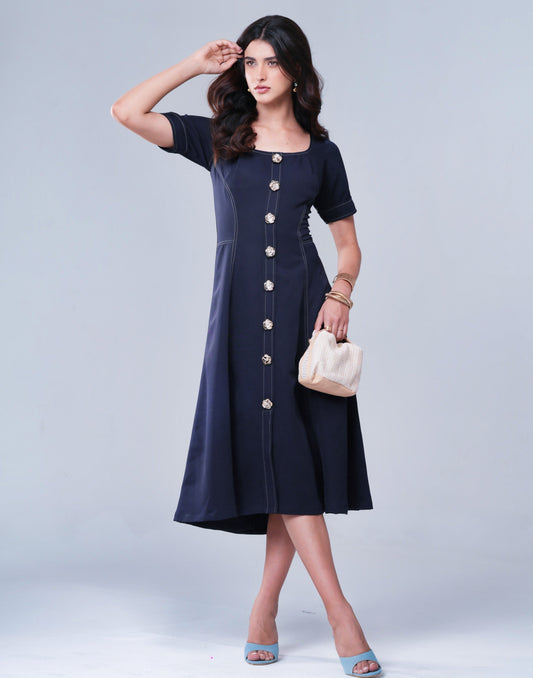
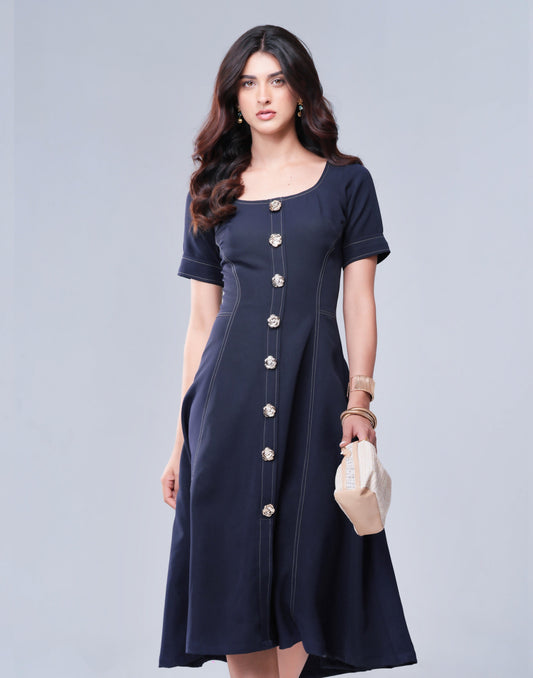
Fit-and-Flare Midi Dresses — Proportionally Flattering
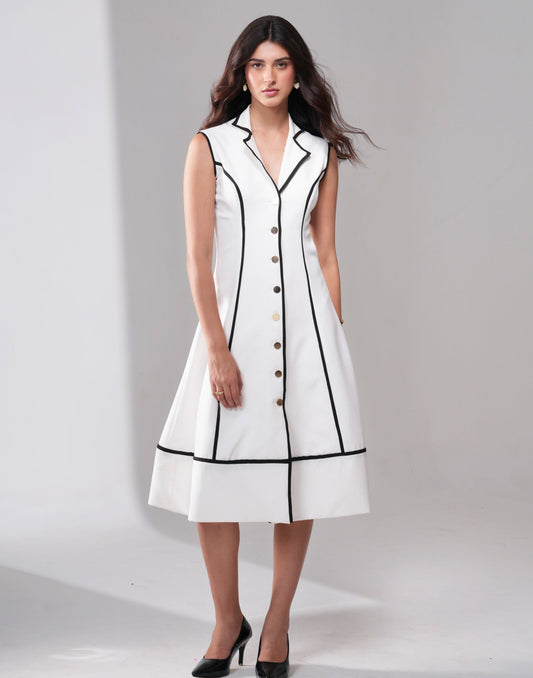
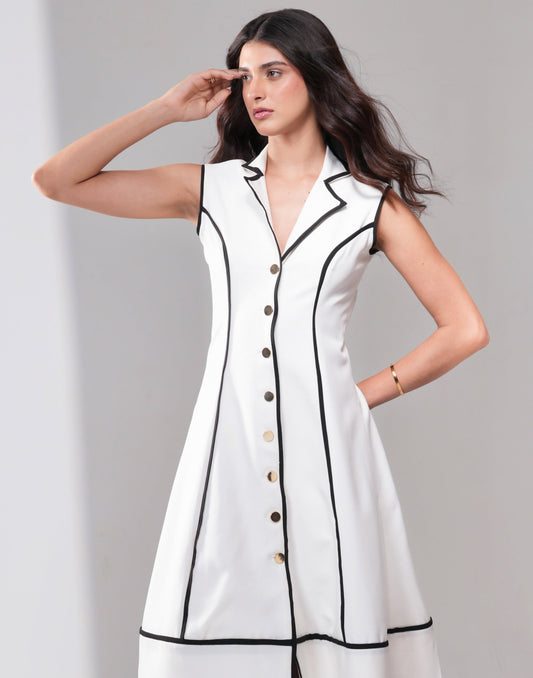
A fit-and-flare silhouette — fitted bodice, flared skirt — creates the same proportional balance as a wrap dress, with more design flexibility. Choose midi dresses where the fitted bodice ends at the natural waist (not below the bust or at the hip) and where the flared skirt hits at or just above the knee.
Piece 04
High-Waist Pants and Skirts — The Lengthening Trick
High-waist bottoms are the unsung hero of petite styling. They visually move the waistline up, which makes the legs appear longer. Combined with a fitted, fully tucked-in top, the effect is a leg line that reads as proportionally longer than it actually is.
Choose: high-waist denim, high-waist pleated trousers, high-waist flared midi skirts. Avoid: low-rise and mid-rise denim, hip-sitting trousers — both shorten the visible leg line significantly.
Piece 05
Cropped Jackets and Blazers — Proportional Outerwear
A cropped or waist-length blazer keeps the silhouette balanced on a petite frame. A long blazer or duster coat that hits at mid-thigh on an average frame can hit at the knee on a petite frame — turning a chic outerwear piece into an overwhelming silhouette.
Choose: cropped blazers, fitted jackets that end at or above the natural waist, structured shirt-jackets with a defined waistline. Avoid: oversized boyfriend blazers, long duster coats, anything with intentionally dropped shoulders.
Piece 06
Maxi Dresses with a Defined Waist — Yes, You Can Wear Them
Petite women have been told for years to avoid maxi dresses. The reality is more nuanced: maxis with a defined waist work beautifully on petite frames. Maxis without a waistline don't. The deciding factor isn't the length — it's the silhouette.
Choose: wrap maxis, fitted-bodice maxis with flared skirts, maxis with a built-in belt or sash, maxis with a clearly marked empire or natural waistline. Avoid: shapeless straight-cut maxis without waist definition, very tiered maxis that add visual horizontal lines, dropped-waist maxis where the waistline sits at the hip.
5 Rules for Petite Indian Women's Western Wear
- ✦ Visible waist, always. Tuck in, belt up, choose silhouettes with built-in waist definition. Without a defined waist, even the best clothes can read as shapeless on a petite frame.
- ✦ Tonal over contrasting. An outfit in one colour or tonally-related shades reads as significantly taller than one with a strong waist-break in colour. Co-ord sets are flattering for exactly this reason.
- ✦ Hemlines at narrow points. Above-knee, at-ankle, or below-wrist. Avoid hems that hit at the widest part of the calf, thigh, or bicep.
- ✦ Scale prints to frame. Small-to-medium prints, or larger prints with negative space between motifs. Avoid massive prints that visually dominate the silhouette.
- ✦ Tailor without hesitation. A 1-2 inch hem adjustment costs ₹100-300 and transforms how a piece sits. Most petite fit issues are length issues, and length is the cheapest, most impactful tailoring fix available.
What to Approach Carefully on a Petite Frame
- ✦ Oversized everything stacked together. Oversized blazer, oversized pants, oversized handbag — the cumulative effect on a petite frame is overwhelming. Use one oversized element at a time, balanced against fitted pieces elsewhere.
- ✦ Mid-calf hemlines that ride up. A standard midi designed for 5'7\" can sit at the calf's widest point on someone 5'2\". Try every midi at your actual height — not in pictures — before committing. Tailor any awkward mid-calf hems up by 1-2 inches.
- ✦ Drop-shoulder cuts. Dropped shoulders are designed to make a frame look broader. On a petite frame, they often just look like an ill-fitting top. Choose tops where the shoulder seam sits at your actual shoulder line.
- ✦ Long-line tops over flowy pants. Tunic-length tops worn over palazzos or wide-leg pants can swallow a petite frame. Either choose a fitted top with the wide-leg pant, or a relaxed top with fitted bottoms — not relaxed-with-relaxed.
- ✦ Massive single-print dresses. One huge floral that takes up the entire bodice on a petite frame becomes the entire visual story. Smaller-scale prints, or florals with breathing space, photograph and read more proportionally.
- ✦ Round-toe heavy shoes. Chunky round-toe loafers or platform sneakers can shorten the leg line. Pointed-toe flats, block-heeled sandals, and slim sneakers in nude tones all elongate the leg.
Frequently Asked Questions
What is considered petite for Indian women?
Petite is generally defined as women 5'4" (163 cm) or under, regardless of body weight or build. The label refers specifically to height and frame proportions — not size. A petite woman can be slim, curvy, or somewhere in between.
What styles should petite women avoid?
Petite women should generally avoid silhouettes that overwhelm the frame: oversized maxi dresses with no waist definition, heavy ankle-length palazzos that hide the leg line, very wide-leg trousers without structure, and large dramatic prints that visually dominate. The rule isn't to avoid these elements entirely — it's to use them one at a time, never stacked.
Can petite women wear maxi dresses?
Absolutely. The key is choosing maxis with a defined waist (wrap, fitted bodice, or belted) and a hem that hits at the ankle rather than dragging on the floor. A maxi with a clearly marked waistline elongates the upper body and creates proportional balance.
What length co-ord set works best for petite women?
A co-ord set with a cropped or waist-length top paired with cropped, ankle-length, or fitted flared pants works most flatteringly. Avoid co-ords with very long tops that sit at mid-thigh or hip — they shorten the leg line.
What dress lengths flatter petite Indian women?
Above-knee, knee-length, mid-calf (skimming the calf), and ankle-length all flatter petite frames. The lengths to handle carefully are mid-calf hemlines that hit at the widest part of the calf. If a midi sits awkwardly mid-calf, take it to a tailor for a 1-2 inch hem adjustment.
Are co-ord sets good for petite women?
Yes — co-ord sets are one of the most flattering categories for petite women. The matching colour creates a visual line from shoulder to ankle that elongates the entire silhouette. Choose co-ords with cropped tops and ankle-length flared or wide-leg pants for the most lengthening effect.
Should petite women wear high heels?
Heels are an option, not a requirement. Block heels (2-3 inches), kitten heels, and pointed-toe flats all create a leg-lengthening effect without committing to towering heights. Pointed toes, nude tones, and ankle-line continuity matter more than heel height.
What sizes should petite women look for?
Size depends on body measurements, not on whether you're petite. A petite woman can wear S, M, L, or XL depending on her bust, waist, and hip measurements. The challenge is usually length — the right size in the body but with sleeves or hems that need adjustment. Always read brand size charts carefully and budget for minor tailoring.
Wrap, Fit-and-Flare, and Defined-Waist Dresses
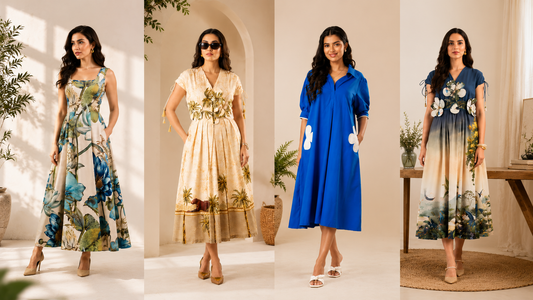
A second edit — dresses with the built-in waist definition that flatters a petite frame by default. Each one is cut with a clearly defined silhouette, the kind of proportion that makes a petite figure read as deliberate rather than dressed-down.


Petite Isn't a Limitation. It's a Set of Proportions to Dress For.
Once you understand the principles — visible waist, tonal dressing, hems at narrow points, prints scaled to frame, fabrics that hold without bulk, and a tailor on speed dial — dressing for a petite figure becomes one of the easiest body categories to style for.
The clothes are out there. The brands are designing them. The size charts are getting better. And with the right principles, almost every western silhouette is available to you. Build the wardrobe that flatters your specific proportions — and forget the advice that wasn't written for you.
Shop the Collection
Tags: