
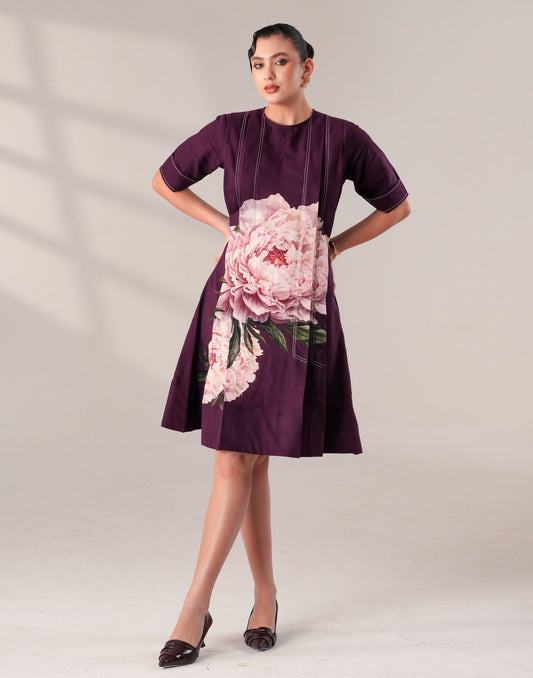


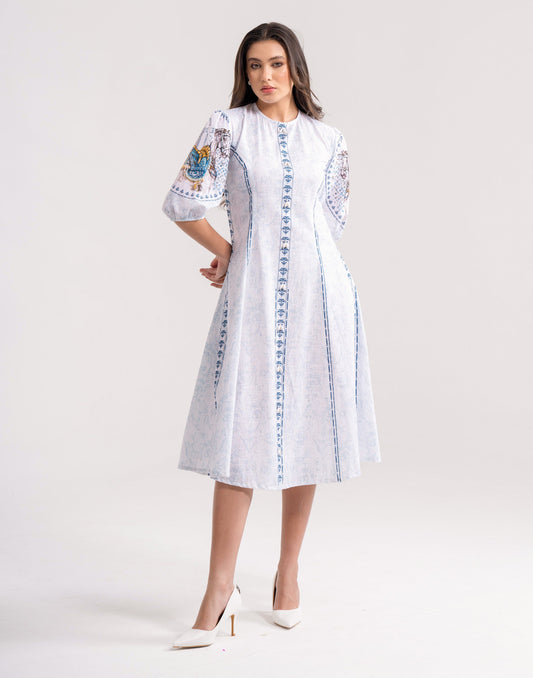


Online clothing shopping in India has never been more accessible — or more confusing. With thousands of brands, inconsistent sizing standards, vague fabric descriptions, and return policies that range from genuinely generous to genuinely frustrating, the experience of buying clothes online in India can feel like a lottery. Some orders are exactly as promised. Others arrive three sizes off, in a fabric that bears no resemblance to what was photographed.
This guide exists to close that gap. Whether you are shopping from a large marketplace, a small Indian fashion brand, or a boutique label like Label By Mohita, the same principles apply — and once you understand them, online shopping for clothes in India becomes a significantly more reliable, more enjoyable, and less expensive experience.
We cover everything: how to size yourself correctly, how to read a size chart, how to assess fabric quality before it arrives, how to understand return policies, and how to identify the brands worth trusting before you place your first order with them.
Chapter One — Sizing
Sizing 01
Measure Yourself — Every Time, Before Every Order
The single most important thing you can do before buying clothes online in India is measure yourself — and do it before every order, not just once. Bodies change with seasons, with what you are eating, with how you are sleeping. A measurement from six months ago is not the measurement to shop with today.
You need three measurements, taken with a soft measuring tape in centimetres: your bust (around the fullest part of your chest, with the tape parallel to the floor), your waist (around the narrowest part of your torso, usually two to three inches above your navel), and your hips (around the fullest part of your hips and seat, usually seven to nine inches below your waist). Write them down. Keep them in your phone. Use them every time you order.
BustAround the fullest part of your chest — tape parallel to the floor
WaistAround the narrowest part of your torso — 2 to 3 inches above the navel
HipsAround the fullest part — 7 to 9 inches below the waist
How oftenMeasure before every order — measurements change seasonally
Mohita's Tip: When measuring your bust, wear the bra you would typically wear with the garment you are ordering — not a padded push-up bra if you would wear a soft bralette, and not a sports bra if you would wear an underwired one. The difference can be two centimetres or more, and two centimetres is often the difference between a size that fits beautifully and one that does not.
Sizing 02
Read the Brand's Size Chart — Not a Generic One
Indian fashion brands do not follow a universal sizing standard. A size M at Label By Mohita, a size M at a fast fashion marketplace, and a size M at a high street brand can differ by four to six centimetres across the bust measurement alone. This is not a flaw — it is simply the reality of a market without standardised sizing. The only size chart that matters is the one published by the specific brand you are ordering from, for that specific garment.
When reading a brand's size chart, always compare your actual measurements — not your usual size label — to the chart's measurements. If the chart shows measurements in inches and you work in centimetres, convert carefully (1 inch = 2.54 centimetres). If the chart gives a range for each size, choose the size whose range includes your measurement comfortably — not at the very edge of it.
Rule 01Use the brand's own size chart — not a generic Indian sizing guide
Rule 02Compare your measurements to the chart, not your usual size label
Rule 03Choose sizes where your measurement sits comfortably mid-range
Rule 04When between sizes, always go up — not down
Mohita's Tip: When you are genuinely between two sizes on a brand's chart, the rule is always size up — not down. A garment that is slightly too large can be cinched with a belt, tucked, or adjusted by a tailor for a few hundred rupees. A garment that is too small cannot be made larger without significant and expensive alteration — and most of the time cannot be altered at all. Size up. Always.
Sizing 03
Sizing Co-ord Sets, Dresses, and Separates — The Specific Rules
Different garment types have different sizing logic — and understanding these differences prevents the majority of online sizing mistakes Indian women make.
Co-ord sets: Both pieces come in the same size, which means you must size for your largest measurement. If your bust is a size M but your hips are a size L, order size L and have the top adjusted if needed. Do not order a size M hoping the bottom will fit — it will not. At Label By Mohita, we always recommend sizing by your largest measurement for co-ord sets, and our customer service team is always available to advise before you order.
Dresses: Size for your bust measurement as the primary guide for fitted or structured dresses. For wrap dresses and flowy silhouettes with adjustable closures, sizing is more forgiving — these often work across a range of measurements. For bodycon or fitted dresses, size for your hips if they are larger than your bust measurement.
Tops and shirts: Size for your bust measurement. A top that fits across the bust can almost always be adjusted at the waist or hem, but a top that is too small across the bust cannot be fixed.
Skirts and trousers: Size for your hip measurement, not your waist. Waistbands can always be taken in by a tailor; hip seams generally cannot be let out without extra fabric in the seam allowance.
Co-ord setsSize by your largest measurement — bust, waist, or hips
DressesSize by bust for fitted styles, hips for bodycon styles
TopsSize by bust — always
BottomsSize by hips — waistbands can be altered, hip seams cannot
Mohita's Tip: Keep a trusted local tailor in mind when you order online. A good tailor relationship is the secret weapon of every woman who shops online successfully. Taking in a waistband, shortening a hem, or nipping in a side seam costs between ₹100 and ₹400 at most Indian tailors — and it transforms an "almost right" garment into a perfectly fitted one. The ability to make small adjustments means you can be more confident ordering your best size, rather than waiting for a perfect fit that may never come.
Chapter Two — Fabric and Quality
Quality 01
How to Read a Product Description for Fabric Quality
The product description is your primary source of information about a garment's quality before it arrives — and learning to read it critically is one of the most valuable skills in online shopping. The difference between a brand that is confident in its quality and one that is not is almost always visible in how they describe their fabrics.
What to look for: Specific fabric composition listed in percentages or clear descriptors — "100% cotton," "rayon-linen blend," "crepe with 3% elastane." Specific care instructions that match the fabric type — cotton should be machine washable; rayon should require cold water and gentle cycles. Specific fabric weight or texture descriptors — "medium-weight cotton," "lightweight crepe," "structured linen-blend."
What to be cautious of: Vague descriptions that avoid naming the actual fabric — "soft premium fabric," "high-quality material," "luxurious feel." These phrases almost always indicate that the fabric is either not what it appears in photos or not of a quality the brand feels confident naming. A brand that is proud of its fabric will always name it specifically.
Good sign"100% cotton" or "rayon-linen blend" — specific and transparent
Good signSpecific care instructions that match the named fabric
Warning sign"Soft premium fabric" — vague language that avoids naming the material
Warning signNo care instructions listed — a brand that knows its fabric always tells you how to care for it
Watch out: The words "premium," "luxurious," and "high-quality" in a product description are marketing language — not quality indicators. Any brand can use these words for any product. The only reliable quality indicator in a product description is specific, accurate information about what the fabric actually is.
Quality 02
How to Use Customer Reviews to Assess Quality
Customer reviews are one of the most reliable quality signals available in online shopping — but only if you know what to look for. Star ratings alone tell you very little. The quality is in the details of what reviewers actually say.
What to look for in reviews: Mentions of fabric quality, weight, and texture — "the fabric is thicker than expected," "the cotton is really soft," "the rayon drapes beautifully." Mentions of whether the product matches the photos — "exactly as shown," "the colour is slightly darker in person." Mentions of fit accuracy — "the size M fits true to the size chart," "runs a bit small across the bust." Customer photos, where available, are the most valuable review element — they show the product in real conditions, on real bodies, in real lighting.
What to discount: Very short reviews without specifics ("good product," "happy with purchase"). Reviews that sound templated or overly formal. Reviews that only discuss delivery speed without mentioning the product itself. These reviews provide no useful quality information and should not influence your purchase decision.
Most valuableCustomer photos — the product in real conditions, on real people
Very valuableSpecific fabric and fit mentions — "thicker than expected," "true to size chart"
Less usefulGeneric positive reviews without specifics
Useful signalHow the brand responds to negative reviews — patience and solutions signal trust
Mohita's Tip: Check a brand's social media — particularly Instagram and Pinterest — for real customer photos. Any brand with genuine, happy customers will have real women posting photos in their clothes. If a brand's social media shows only professional model photos and no customer posts, that absence is worth noting. Brands whose customers love their products almost always end up with organic customer content — because happy customers share what they wear.
Chapter Three — Returns and Exchanges
Returns 01
How to Read a Return Policy Before You Order
Reading a return policy before placing an order is not pessimistic — it is the single most important consumer protection habit available to online shoppers in India. Return policies vary significantly between brands, and a policy that sounds generous in its headline can have conditions that make returns functionally very difficult in practice.
What to check: The return window — how many days from delivery do you have to initiate a return? Seven days is standard for many Indian brands; fourteen or thirty days is more generous. What qualifies for return — is the item required to be unused, unwashed, and with all original tags attached? Does the brand require an unboxing video as proof of condition on receipt? What do you receive — a full refund to your original payment method, store credit, or an exchange only? Who pays for return shipping — the customer or the brand?
Check: WindowHow many days to initiate a return? 7, 14, or 30?
Check: ConditionsTags on, unused, unboxing video required?
Check: Refund typeCash refund, store credit, or exchange only?
Check: ShippingWho pays return shipping — you or the brand?
Important: Store credit instead of a cash refund is standard practice for many legitimate Indian fashion brands — including Label By Mohita — and is not a red flag if clearly stated before purchase. It becomes a problem only when it is hidden in small print after you have already ordered. Always read the return policy before ordering, not after.
Returns 02
The Unboxing Video — Why It Matters More Than You Think
Many Indian fashion brands now require an unboxing video as a condition of processing any return or exchange claim. This is not unreasonable — it protects both the customer and the brand from disputes about product condition on arrival. If you order from a brand that requires an unboxing video, record one every single time, without exception, even if the package looks undamaged.
The unboxing video should begin before the outer packaging is opened, show the package clearly, and continue through the full unpacking until the product is visible. It should be a single, uncut video — pauses or edits make it inadmissible for most brand return processes. If the product is damaged or incorrect on arrival, the unboxing video is your proof. Without it, most brands cannot process a valid return claim. With it, a damaged or incorrect item is almost always resolved quickly and fairly.
StartBefore the outer packaging is opened — show the package clearly
ContinueThrough the entire unboxing without pausing or editing the video
When to recordEvery single delivery, even if the package looks undamaged
Why it mattersWithout it, most brands cannot process damage or incorrect item claims
Mohita's Tip: Make unboxing videos a habit rather than a decision. The thirty seconds it takes to record one is insignificant compared to the frustration of receiving a damaged item without the proof needed to get it resolved. At Label By Mohita, we require an unboxing video for all return and exchange claims — not to make returns difficult, but to ensure that every legitimate claim can be processed quickly and fairly for every customer.
Chapter Four — Identifying Trustworthy Brands
Red Flags — When to Shop Elsewhere
- ✦ No size chart with actual measurements. A brand that only lists S, M, L, XL without providing the actual centimetre measurements for each size is asking you to guess. That guess will sometimes be wrong. Trustworthy brands always publish measurements.
- ✦ Vague fabric descriptions. "Soft premium material," "high-quality fabric," "luxurious feel" — any description that avoids naming what the fabric actually is should prompt caution. Brands confident in their fabric quality always name it specifically.
- ✦ No return or exchange policy visible on the website. If you cannot find the return policy before you order, you cannot know what you are agreeing to. Any reputable brand publishes its return policy clearly and prominently.
- ✦ Only professional model photos — no customer photos anywhere. A brand with real, happy customers will always have some evidence of real customers wearing their products — on social media, in reviews, in user-generated content. An absence of any real customer imagery warrants caution.
- ✦ No contact information or customer service channel. A brand you cannot reach before a purchase is a brand you cannot reach after one. Look for a working email address, a WhatsApp number, or an active Instagram DM channel before you order.
- ✦ Prices that seem implausibly low for the product shown. A co-ord set photographed in a high-quality fabric and a polished setting, priced at ₹299, is not what it appears. Quality fabric, quality construction, and quality photography all cost money. If the price does not reflect the product shown, the product will not reflect the photography.
Green Flags — Signs of a Brand Worth Trusting
- ✦ Detailed size charts with actual centimetre measurements. A brand that provides specific measurements for each size — not just S, M, L labels — is confident that its sizing is accurate and consistent. This is the most reliable sizing trust signal available.
- ✦ Specific fabric compositions listed for every product. "100% cotton," "rayon-linen blend," "crepe with 3% elastane" — brands that name their fabrics specifically are confident in what they are selling. This specificity also means you can care for the garment correctly after purchase.
- ✦ Clear, accessible return and exchange policy. A return policy that is easy to find, clearly written, and consistent with what customer reviews describe in practice is a strong trust signal. A policy that is hidden, vague, or contradicted by customer review experiences is not.
- ✦ Real customer photos on social media and product pages. Organic customer content — women posting photos in the brand's clothes, tagging the brand, sharing their genuine experience — is the strongest quality signal in Indian fashion e-commerce. It cannot be manufactured.
- ✦ Responsive customer service that resolves problems fairly. Check how a brand responds to negative reviews and customer service complaints on social media. A brand that responds promptly, takes responsibility where appropriate, and resolves problems fairly is a brand that respects its customers.
- ✦ Transparent about delivery timelines. A brand that clearly states how long delivery takes — and delivers within that stated timeframe based on customer reviews — is a brand that manages expectations honestly. Honest delivery communication is a small but reliable trust signal.
Before You Order — The Complete Checklist
Run through this list before placing any online clothing order in India.
Sizing
- I have measured my bust, waist, and hips in centimetres today
- I have found and read this brand's specific size chart — not a generic one
- I have compared my measurements to the chart — not my usual size label
- If between sizes, I am ordering the larger size
- For a co-ord set, I am sizing by my largest measurement
Fabric and Quality
- The fabric composition is specifically named in the product description
- Care instructions are listed and match the named fabric type
- I have read at least five customer reviews for specific fabric and fit mentions
- I have checked for customer photos on social media or the product page
Returns and Policy
- I have read the full return and exchange policy before ordering
- I know the return window — how many days I have after delivery
- I know whether I will receive a refund or store credit for a return
- I know whether an unboxing video is required for claims
- I will record an unboxing video when this delivery arrives
Brand Trust
- The brand has a working contact method — email, WhatsApp, or social media DM
- I can see real customer photos of this brand's products somewhere
- The return policy is clearly visible on the website — not hidden
Frequently Asked Questions
How do I find the right size when buying clothes online in India?
Always measure yourself before ordering — bust, waist, and hips in centimetres using a soft measuring tape. Never rely on your usual size number, as sizing varies significantly between Indian brands. Compare your measurements to the brand's specific size chart, not a generic one. When between sizes, size up for tops and size by your largest measurement for bottoms. For co-ord sets, size by whichever measurement is largest — you can always alter a waistband but not let out a seam that has no extra fabric.
How do I know if the fabric quality is good when shopping online?
Look for brands that list specific fabric compositions rather than vague descriptions like "soft fabric" or "premium material." Read customer reviews specifically for mentions of fabric quality, weight, and whether the product matches the photos. Check if the brand shows close-up fabric photos or videos. Brands that are transparent about fabric composition and care instructions are generally more trustworthy about quality than those that use only aspirational language.
What should I check before buying from an Indian fashion brand online?
Before buying from an Indian fashion brand online, check: their return and exchange policy, their size chart with actual measurements, their fabric composition listing, customer reviews with photos, their social media presence with real customer content, and their delivery timelines. A brand that is transparent about all of these things is significantly more trustworthy than one that keeps any of them vague.
Are Indian online fashion brands reliable?
Many Indian online fashion brands are excellent — transparent about sizing, honest about fabrics, and genuinely customer-focused. The key is knowing what to look for before you order. Reliable Indian fashion brands publish detailed size charts with actual measurements, list specific fabric compositions, have a clear and fair return or exchange policy, and have real customer photos on their social media and product pages.
What is the return policy for most Indian fashion brands?
Return policies vary significantly between Indian fashion brands. Many smaller and mid-size Indian fashion brands offer store credit or exchange rather than cash refunds for returns — this is standard practice and not a red flag if clearly communicated before purchase. Before buying, always read the return policy in full and note: the return window, what qualifies for return, and whether you receive store credit or a refund.
How do I avoid buying the wrong size in a co-ord set online?
For co-ord sets specifically, size by your largest measurement — either bust, waist, or hips — since both pieces come in the same size. Measure carefully and compare to the brand's size chart. If you are between sizes, always go up rather than down — a slightly larger co-ord can be cinched with a belt or altered, but a too-small one cannot be fixed without significant tailoring.
Why do Indian fashion brands give store credit instead of a refund?
Many Indian fashion brands — particularly smaller and mid-size labels — offer store credit rather than cash refunds because the economics of small-scale fashion retail in India make full cash refunds on returns financially challenging. Store credit policies allow brands to manage returns sustainably while still offering customers a fair resolution. This is standard industry practice and is not a red flag, provided it is clearly communicated before purchase. Always read the return policy before ordering.
Shop Smarter. Every Time.
Online clothes shopping in India does not have to feel like a gamble. With the right measurements, the right reading of a size chart, a basic understanding of fabric quality signals, and a quick read of the return policy before you order — the vast majority of online shopping frustrations are entirely preventable.
The brands worth shopping from are the ones that make all of this easy: transparent sizing, specific fabrics, clear policies, and genuine customer support. Those brands exist in India — and once you find them, online shopping becomes exactly what it should be: convenient, reliable, and genuinely enjoyable.
Shop Label By Mohita
Tags:
Previous
Outfits for a Kitty Party in India — 10 Chic Ideas for Every Occasion
Next
Rayon vs Cotton Co-ord Sets — Which is Better for Indian Summer?


